
Published in 2026
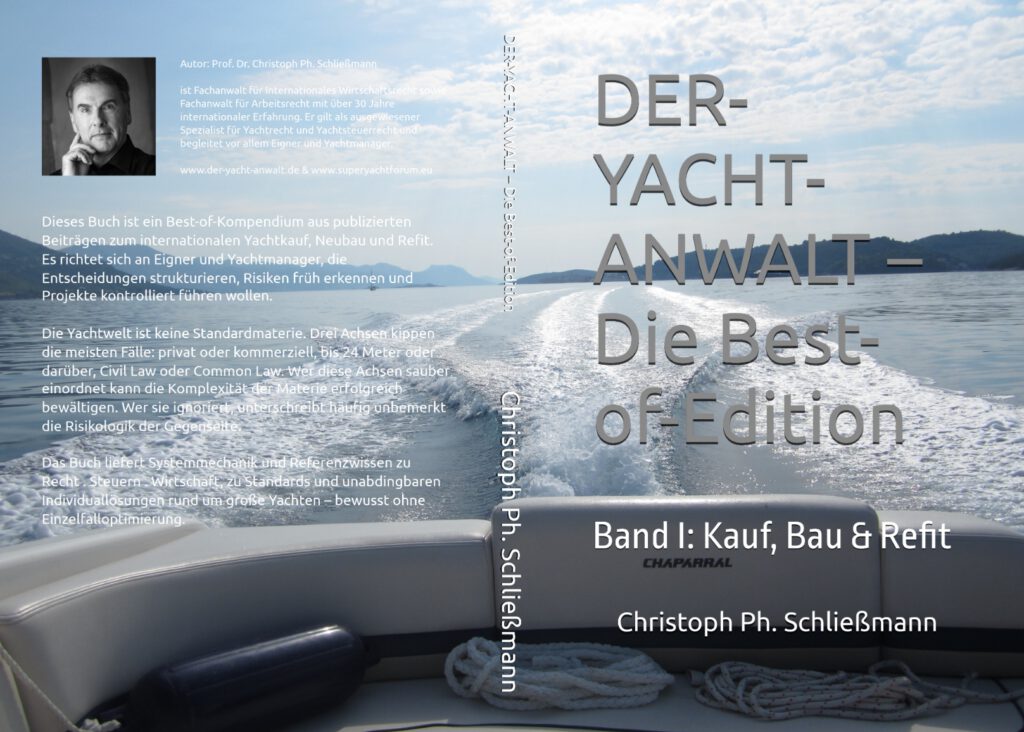
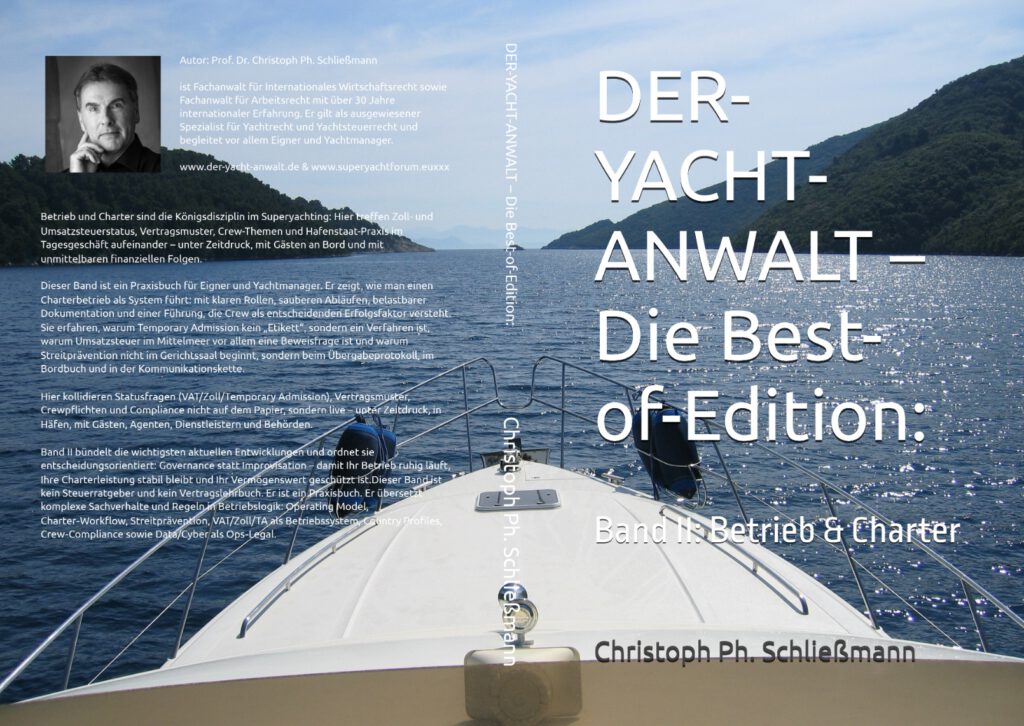
DER-YACHT-ANWALT – Die Best-of-Edition
- Band I: Kauf, Bau & Refit
- Band II: Betrieb & Charter
Paperbacks – January 2026 by Christoph Philipp Schließmann (author)
Volume I is a ‘best of’ compendium of published articles on the international yacht market, new-builds and refits. It is aimed at owners and yacht managers who wish to structure their decision-making, identify risks at an early stage and manage projects in a controlled manner. The world of yachting is not a straightforward matter. Three key factors determine the nature of most cases: private or commercial, up to 24 metres or above, and civil law or common law. Those who can clearly categorise these factors can successfully navigate the complexity of the subject. Those who ignore them often unwittingly accept the other party’s risk logic. The book provides a systematic framework and reference knowledge on law, taxation and economics, covering standards and essential bespoke solutions relating to large yachts – deliberately without focusing on optimisation for individual cases.
Volume II is a practical guide for owners and yacht managers. Operation and charter are the supreme disciplines in superyachting: This is where customs and VAT status, contract templates, crew issues and port state practices converge in day-to-day operations – under time pressure, with guests on board and with immediate financial consequences. Volume II demonstrates how to manage a charter operation as a system: with clear roles, streamlined processes, robust documentation and leadership that recognises the crew as a crucial factor for success. You will learn why Temporary Admission is not merely a ‘label’ but a procedure, why VAT in the Mediterranean is primarily a matter of evidence, and why dispute prevention does not begin in the courtroom but with the handover report, the logbook and the chain of communication. This is where issues of status (VAT/customs/temporary admission), standard contracts, crew duties and compliance collide – not on paper, but in real life – under time pressure, in ports, with guests, agents, service providers and authorities. Volume II brings together the most important current developments and organises them in a decision-oriented manner: governance rather than improvisation – so that your operations run smoothly, your charter performance remains stable and your assets are protected. This volume is neither a tax guide nor a textbook on contracts. It is a practical guide. It translates complex issues and rules into operational logic: operating model, charter workflow, dispute prevention, VAT/customs/TA as an operating system, country profiles, crew compliance, and data/cyber as ops-legal.
*** Translated with www.DeepL.com/Translator (free version) ***
Feature articles on SuperYachtNews

2026
<The Procurist as Europe’s registered commercial representative.> Why digital administration must recognise cross-border commercial authority… Digital administration was designed to make cross-border business faster, more transparent and easier to verify. Yet some national procedures still create friction when a company incorporated in one EU member state acts before an authority in another. The difficulty often concerns the person authorised to represent the company. A company may appoint a Procurist: a commercial signatory whose authority derives from company law, a corporate act and an entry in a public register. When that representative applies for a tax number, digital certificate or access to an administrative platform abroad, the authority may nevertheless request a fresh special power of attorney from the managing director.
<The Finca case comes aboard>. Germany’s new yacht-tax case puts owner use, corporate purpose and operational evidence under scrutiny… Legal position as at 2 August 2026 Superyacht structures often look strongest on paper: the yacht is held by a company, and professionally managed and operated across several jurisdictions. German tax law, however, focuses less on the ownership chart than on the operational reality: • Who can use the yacht? • When is it available? • What does the shareholder pay? • Can third-party charters be displaced? • And do the booking records, logbooks, invoices and cash movements support the legal documentation?
<Italy’s new foreign-flag rule and the EU law question.> Italy has introduced a new rule that deserves close attention from owners, managers and advisers working with EU-flagged yachts under 24 metres… The new Article 26-ter of the Italian Codice della Nautica da Diporto applies to foreign-flagged recreational craft up to 24 metres that are owned by Italian residents or Italian legal entities and are navigating or lying in Italian internal waters, territorial waters or ecological protection zones. The rule requires those craft to prove their navigability. If the flag state issues a relevant certificate, that certificate should be carried on board. If the flag state does not issue such a certificate, the yacht must be inspected by an Italian notified technical body, which then issues an attestation valid for five years.
<The template trap. When standard yacht contracts stop serving the transaction, owners may inherit risks they never intended to buy…> The greatest legal risk in a yacht sale is not always hidden in the engine room, the registry or the VAT file. More often, it sits in plain sight – in the document everyone calls “standard”. The superyacht market loves templates: MYBA forms, charter forms, guarantees, novations, delivery lists, KYC schedules, stakeholder clauses and redlines circulate at speed. They promise efficiency and familiarity; they also promise that the market has seen it all before.
<The Monaco flag myth. Can a flag really eliminate VAT on private yacht use in Europe?> A seemingly casual remark by a yacht captain recently caught my attention [The Superyacht Report: Captains Focus, page 23]. Discussing regulatory pressures in the superyacht industry, he explained that his owner’s family had previously been required to pay VAT whenever they used the yacht privately. After changing to the Monaco flag, however, things had allegedly become much easier: “Under our old flag the family had to pay VAT whenever they used the yacht privately. Now, under the Monaco flag, we can charter her for 90 days without personal taxes.” At first glance, the statement appears plausible. Monaco has long enjoyed an almost mythical reputation within yachting circles. For many owners, captains and even advisors, Monaco remains synonymous with flexibility, discretion and tax efficiency. Yet from a European VAT perspective, the statement raises an uncomfortable question: Can changing a yacht’s flag really eliminate VAT consequences arising from private use? The short answer is simple: No. The longer answer is considerably more interesting. The persistent confusion between flag law and tax law
The superyacht industry has always suffered from a tendency to blend together three completely different legal disciplines: maritime law, customs law and VAT law. The result is a collection of industry narratives that often sound convincing but collapse under legal scrutiny.
<Croatia isn’t the outlier, it’s the warning signal> The Mediterranean charter market is entering a new compliance era – and Croatia isn’t the problem, it’s simply ahead of the curve… For years, yacht charter discussions around VAT revolved around one thing: the rate – 13% in Croatia, 22% in Italy, 20% in France, 21% in Spain. The conversation was arithmetic. What was largely ignored was structural control, but that is now changing.
<Croatia’s SSVO 2026 Revisions. What superyacht captains need to know before the Adriatic season…> Croatia’s Ministry of the Sea, Transport and Infrastructure has confirmed a second-stage update of the “Safety of Navigation Ordinance” (SSVO), scheduled to take effect before summer 2026. The headline change is a wider anchor exclusion belt – now 70 metres rather than 50 metres – measured from the shoreline to the point where the chain touches the water. Combined with a broader digital-compliance push and green-fuel incentives, the package has direct operational consequences for large yachts and their tenders.
<First the concept, then the yacht! Our regular legal contibutor explains how the most expensive mistake in yachting is often made before the first contract is signed… > In my previous article for Superyacht News, I argued that standard foreign yacht-holding structures often fail not because they are invalid locally but because they do not survive scrutiny in the owner’s home jurisdiction. The decisive weakness, I suggested, is frequently not incorporation but governance reality. A structure that looks foreign on paper may still be treated very differently once the tax authority follows management, benefit and control back to the owner’s home state. That is only the first half of the problem; the second half begins even earlier. Many owners make the fundamental mistake of choosing the yacht first and only afterwards beginning to think about financing, operational model, flag, jurisdiction, VAT, charterability and legal use profile. In practice, this is the wrong sequence. By the time those questions are asked, the owner may already be facing restrictions that could and should have been identified before the purchase agreement is signed or the build specification is finalised. The real strategic order should be the opposite: first the concept, then the yacht. This distinction matters because not every yacht fits every ownership logic.
<Why standard yacht-holding structures fail German scrutiny: The case for the CPS-Croatia-Yacht-Charter-Model® in cross-border charter operations…> In European yacht ownership, one of the most persistent commercial illusions is that a vessel can be placed into a local company structure in one jurisdiction while the real entrepreneurial control remains elsewhere without material tax consequences. In practice, that assumption is increasingly unsafe. The decisive issue is rarely the incorporation itself, the decisive issue is whether the structure, as actually lived and managed, can withstand scrutiny in the home jurisdiction of the beneficial principals.That is particularly true where German-resident entrepreneurs, family principals or internationally active owner-managers are involved. From a German perspective, the register extract is never the end of the inquiry, it’s the beginning. Tax authorities and courts will look beyond the incorporation wrapper and ask more difficult questions: who really makes the decisions, where commercial strategy is actually formed, where the key risks are controlled, and whether the operational and governance reality matches the legal narrative. In cross-border yacht ownership and charter, that is often the point at which otherwise elegant structures begin to fail.
<When the contract dies three times: International limitation, appellate misclassification and professional liability risks revealed in this case demonstrate the vital requirement for clarity…> Eight years of civil litigation are rarely an expression of particular complexity but usually the consequence of structural imprecision. The legal dispute between two German parties analysed here – a cross-border boat sale contract subject to a choice of Dutch law – provides an instructive example of how a misclassification at first instance, the absence of doctrinal correction on appeal and the subsequent strict application of limitation doctrine can interact. At the same time, the case demonstrates how closely international subsumption, the safeguarding of limitation periods and professional liability risks are interrelated.
<EU-Erbrecht: die verborgene rechtliche Bruchlinie>: Warum eine Yacht zwar rechtlich vererbt werden kann, aber praktisch unbrauchbar wird, wenn der Besitzer einer Superyacht stirbt… Die Illusion rechtlicher Einfachheit: Das europäische Erbrecht erscheint auf den ersten Blick beruhigend einheitlich. Seit Einführung der EU-Erbrechtsverordnung (Verordnung (EU) Nr. 650/2012) unterliegen grenzüberschreitende Nachlässe einem einheitlichen anwendbaren Recht, in der Regel dem Recht des gewöhnlichen Aufenthalts des Verstorbenen. Ziel ist Klarheit: ein Nachlass, ein Rechtsrahmen. Für viele Anlageklassen funktioniert dieses System recht gut. Für Superyachten jedoch nicht. Eine Yacht gilt rechtlich als bewegliches Vermögen. Wirtschaftlich und operativ verhält sie sich jedoch eher wie eine Mischform aus Immobilie und regulierter Handelsplattform. Ihre Nutzbarkeit, Versicherbarkeit, Hypothekenstruktur und Flaggenberechtigung hängen von der Einhaltung nationaler Registersysteme ab, und diese Systeme fallen vollständig nicht unter den harmonisierenden Anwendungsbereich des EU-Erbrechts.
<When wages become anchors. How owners and managers survive – and prevent – crew-wage arrests…> It rarely begins with a storm. Most days the sea is like glass, the season is mapped, yard slots are reserved and the table is set for the next charter guest. Then a fax, an email, a courier with a single sheet: arresto. The word drops into the ship like an anchor – sudden, heavy. A crewmember claims wages, leave, public holidays. In many European ports – especially in Italy – a judge’s hand reaches quickly, ex parte, and the yacht lies still before it speaks. If you answer only with indignation, you lose time. If you answer only with principles, you lose money. If you understand the grammar of these crises, you find a voice that judges, lawyers and insurers respond to – and you lead the vessel back to open water.
<2026 – The year Europe quietly rewrites the superyacht rulebook>. From emissions accounting to AML duties and flag-state standards: what owners, managers and builders must treat as “live law” this season… The European regulatory tide rarely arrives with breakers; it rises, inch by inch, until you look down and realise you’re standing in it. 2026 is that moment for the superyacht ecosystem. A trio of climate measures now bites in daily operations: the EU’s anti‑money‑laundering (AML) package hard‑codes expectations for high‑value yacht transactions, sustainability reporting has been sequenced rather than scrapped, and Malta – the EU’s pivotal yacht flag – enters its first full year under a revised Commercial Yacht Code. Dates and definitions matter – and they are now settled in black‑letter law.
2025
<Disrupt or be disrupted> Prof. Dr. Christoph Ph. Schließmann on why the maritime industry has reached a strategic inflection point – and why the superyacht sector must redefine its own logic… When Metstrade 2025 opened on 18 November in Amsterdam, one message cut through the noise: the maritime industry is not simply facing change, it is already deep inside a structural transformation. Frank Hugelmeyer, CEO of the National Marine Manufacturers Association (NMMA), set the tone with unusual clarity: “Change is coming. Disrupt or be disrupted.” These words were not a cliché. They captured a profound shift impacting every layer of the maritime value chain – from entry-level leisure boats to the 54-billion-euro superyacht ecosystem. And the keynote that followed, delivered by Le Boat’s Managing Director Cheryl Brown, underscored the same truth: a new generation of consumers, new technologies and a new informational logic are rewriting the industry. This article examines why leisure marine and the superyacht sector are simultaneously converging, diverging and exerting new influence on one another – and why the coming decade will demand a fundamentally different understanding of markets, customers, business models and lifecycle value.
<Croatia resets near-shore operations>: Prof. Dr Christoph Ph. Schließmann explains the strict 500-metre tender rule introduced recently … Croatia’s regulation “Pravilnik o sigurnosti pomorske plovidbe (NN 52/2025)” [Regulations on Maritime Navigation Safety] – in force since 29 March 2025 – refreshes national rules for navigation and coastal safety in Croatia’s internal waters and territorial sea. Two changes matter most for large-yacht programmes: a hard 500-metre operating radius for tenders (the small support boats carried by a yacht and registered as part of the yacht’s equipment) and stricter speed/distance limits near bathing shores, which are set locally for each bay or port.
<The EU data act: A wake-up call looms for the superyacht sector > Prof. Dr Christoph Ph. Schließmann sets out the facts … As the superyacht world embraces ever greater connectivity, digitalisation and data-driven services, one legislative event looms that will necessitate a recalibration of business models, contracts and governance across the industry: Regulation (EU) 2023/2854 – the “Data Act”. The Act was published on 22 December 2023, entered into force on 11 January 2024, most obligations apply from 12 September 2025, design duties for connected products apply from 12 September 2026 and the complete prohibition of switching fees for cloud/data-processing services applies from 12 January 2027.
<Drawing the line between commercial and private use>: Substance over weekends: private use inside commercial yacht structures is the EU-compliance frontier… If there is one recurring misunderstanding in the superyacht world, it’s this: “Our yacht is commercially registered and sits in a leasing/charter structure – so a quiet owner weekend is fine.” Legally and fiscally across the EU, that single “quiet weekend” can unravel years of careful planning: deductions denied, VAT clawed back, customs reliefs lost, and – depending on the jurisdiction – requalification as a hidden profit distribution. The line between commercial and private is policed by hard rules and evolving case law. 2025 has made that line sharper, not softer.
<Liechtenstein family holdings for superyachts>: Governance first, tax re-thought after Germany’s 2025 ruling – how Liechtenstein family holding stands as a yacht vehicle… Over the years we’ve been asked to design yacht-holding structures by putting foundations on the top. An update of the legal framework is an opportunity to introduce a very interesting example of design structure for HWI-yachting engagement.
<Brokers´crossfire: Commission wars in superyacht S&P and new builds> – what the law really says, what the market really pays and how to stay out of the crossfire… The calls usually come after the champagne: a voice from someone “who brought the buyer”, asking where their slice is. In a market where a single tick on a signature page can move eight figures, a commission claim isn’t a nuisance – it’s a live round. The superyacht industry prides itself on relationships, but relationships don’t settle law. Contracts do. So when an unnamed broker or “introducer” surfaces late, who actually pays? How much is really at stake? And what can owners, managers, brokers and yards do to keep opportunistic claims from contaminating the deal?
<When the MYBA charter contract evolves> Professor Dr Christoph Ph. Schließmann: Navigating 2025’s compliance currents, the template’s market monopoly and the EU-consumer course corrections you can’t skip…This year, the MYBA Charter Contract has undergone its most sweeping transformation since its inception. What once read like an old seafarer’s log of familiar clauses now resembles an intricate chart bristling with newly drawn hazard markers. Yacht owners, accustomed to the relative predictability of the MYBA form, find themselves confronting an array of fresh obligations, tightened deadlines and, perhaps most perilously, a false promise of escrow security. If you believed that the standard form offered safe passage, think again: this revision demands strategising far beyond the fill-in-the-blanks diplomacy of previous years.
<Substance over personalisation: Prof. Dr. Christoph Ph. Schließmann responds to MYBA’s “Right to Reply”, its own response to his original article about the updated MYBA charter contract…
<When labour law meets luxury> Professor Dr Christoph Ph. Schließmann outlines the new MLC imperatives for superyacht owners… As a superyacht owner, you’ve mastered the art of hull design, propulsion systems and bespoke interiors. Yet from December 2024 onwards, your greatest gauge of seamanship may be how well you look after those who keep your yacht in motion: the crew. The June 2022 Amendments to the Maritime Labour Convention (MLC) 2006 – binding for virtually every Flag state – and complementary national regulations introduce landmark standards in social connectivity, welfare and financial security.
<When courtrooms meet the quarterdeck> Professor Dr Christoph Ph. Schließmann dissects two landmark insurance cases every superyacht player should know … The choice of law and choice of forum clause you sign today can decide, years later, whether you are paid a cent after a casualty. owners, managers and brokers still wave certain clauses through as “just boilerplate”, yet both headline cases below prove that a poorly chosen jurisdiction or a one-sided governing law clause can paralyse legal recovery.
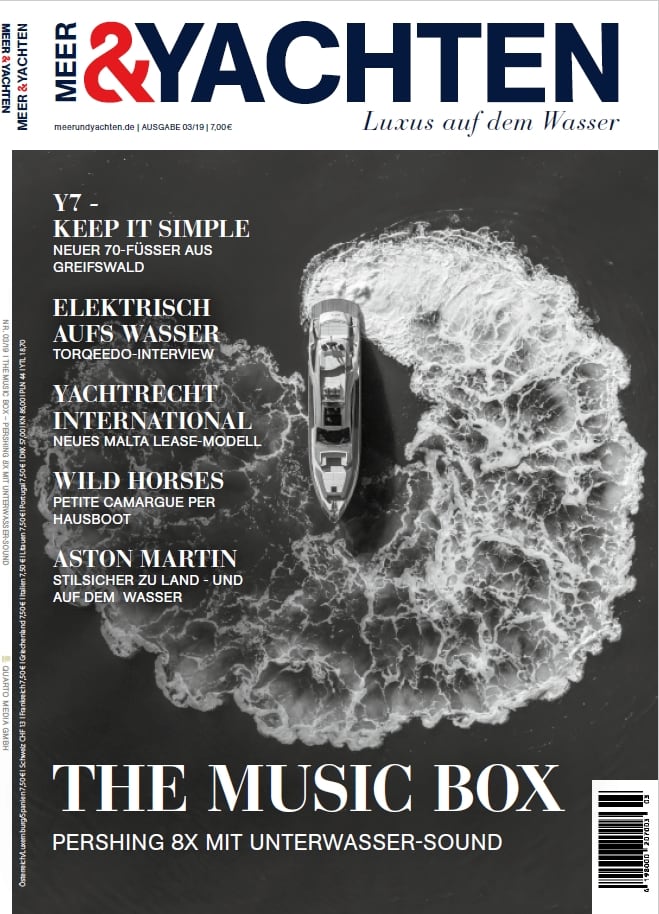
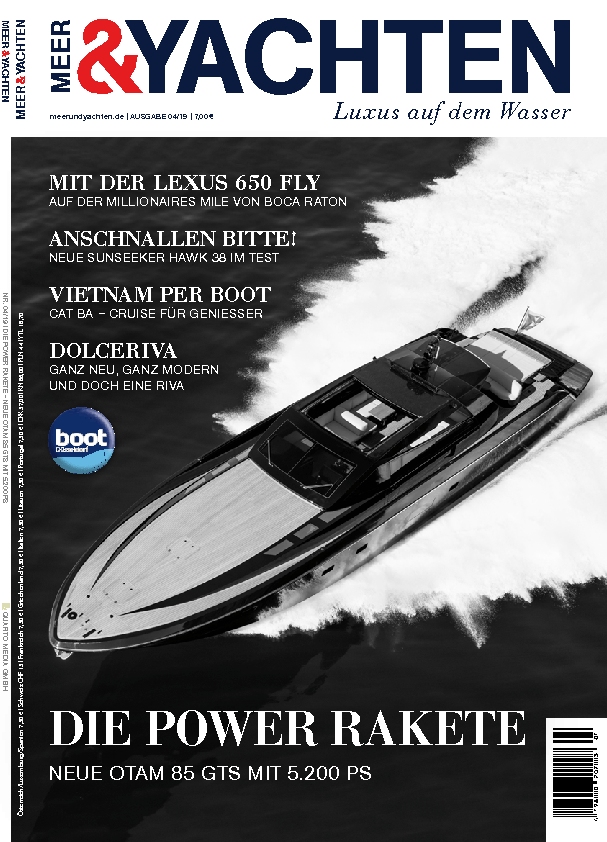
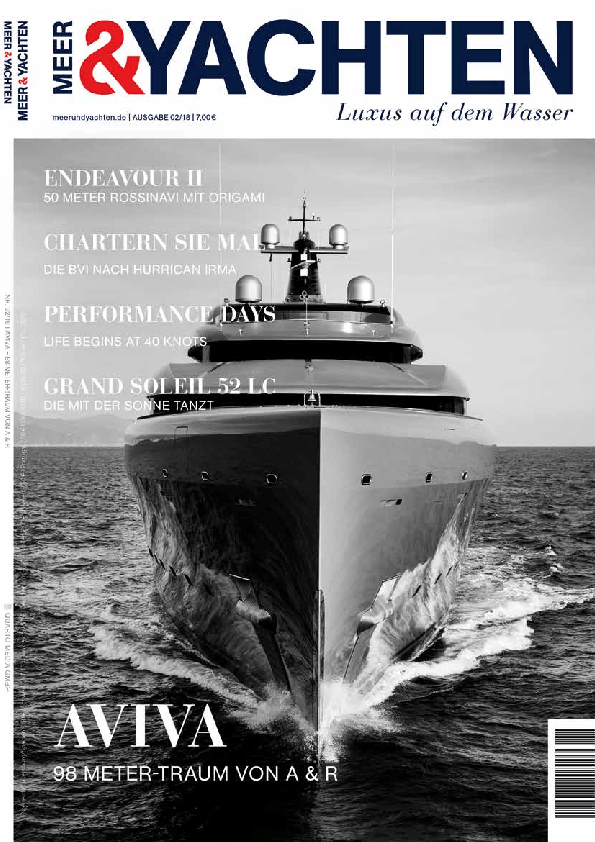
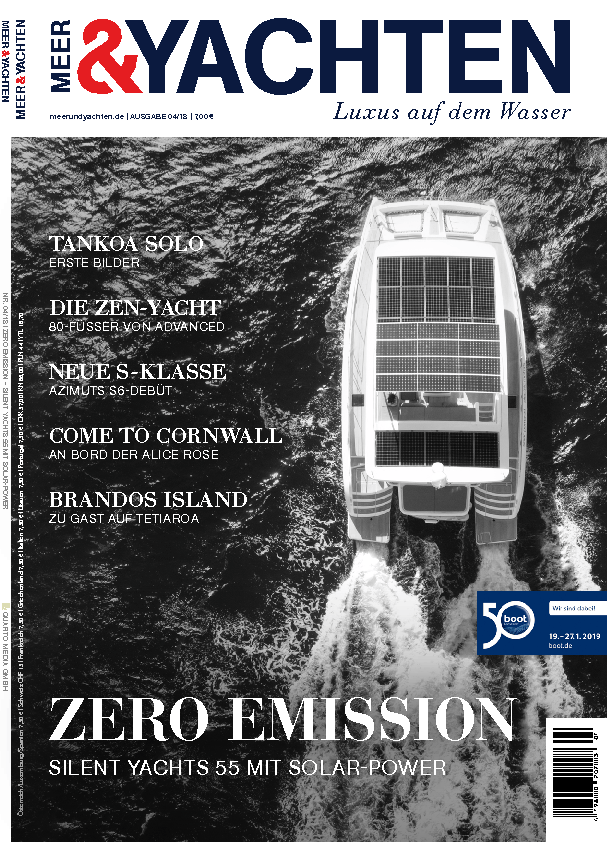
Contributions in Meer & YACHTEN

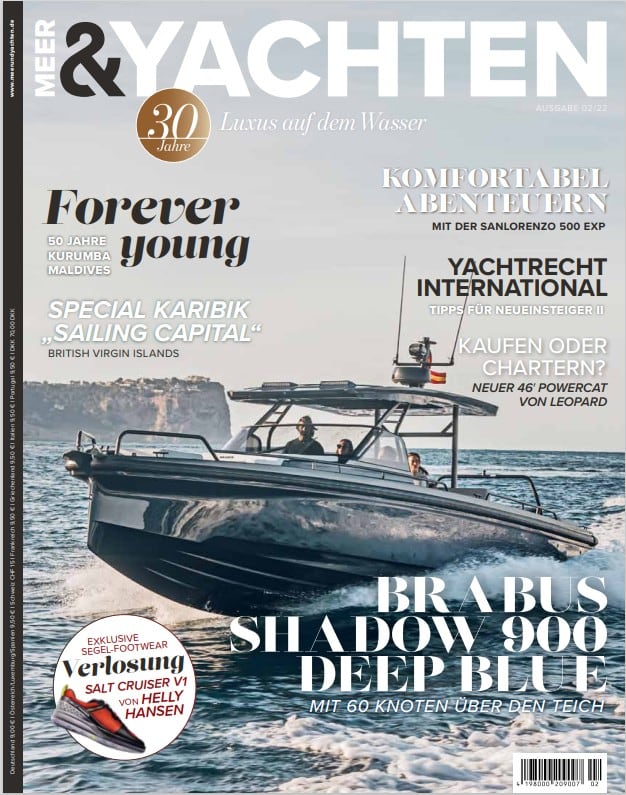
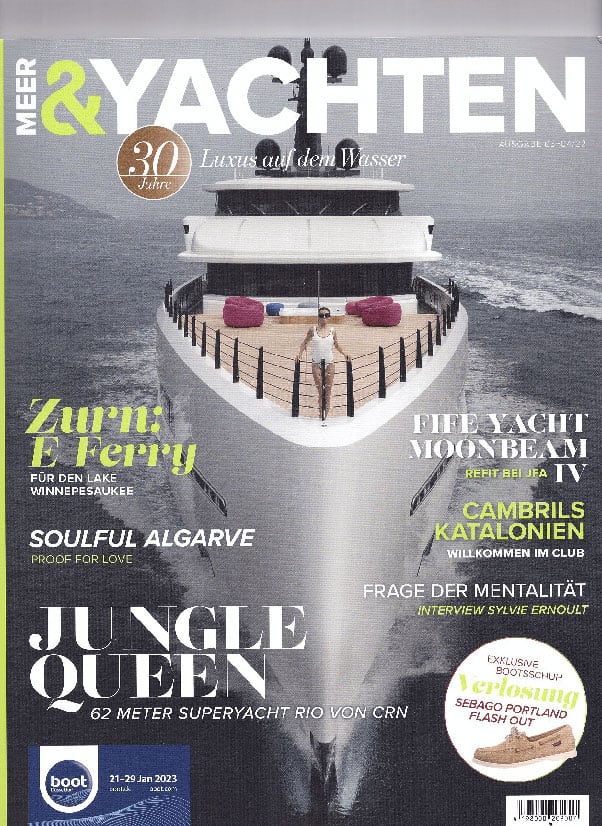
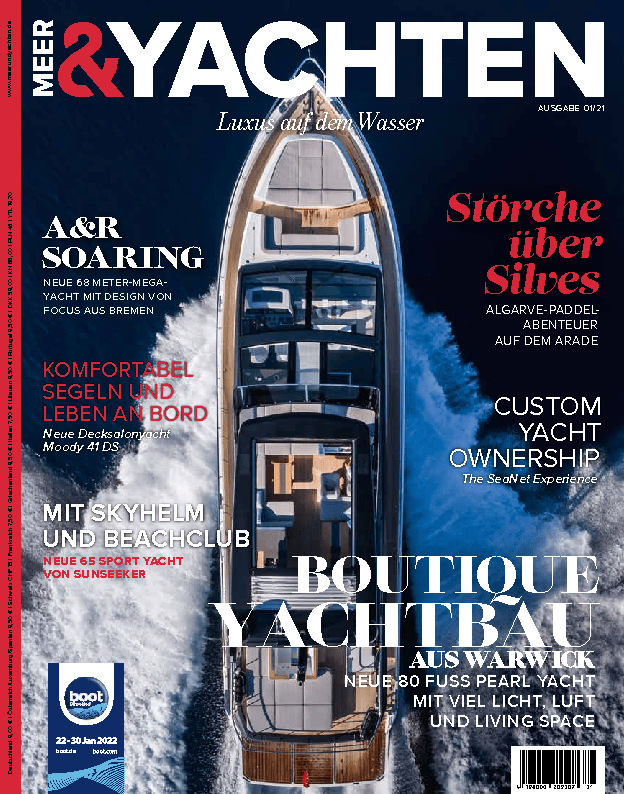
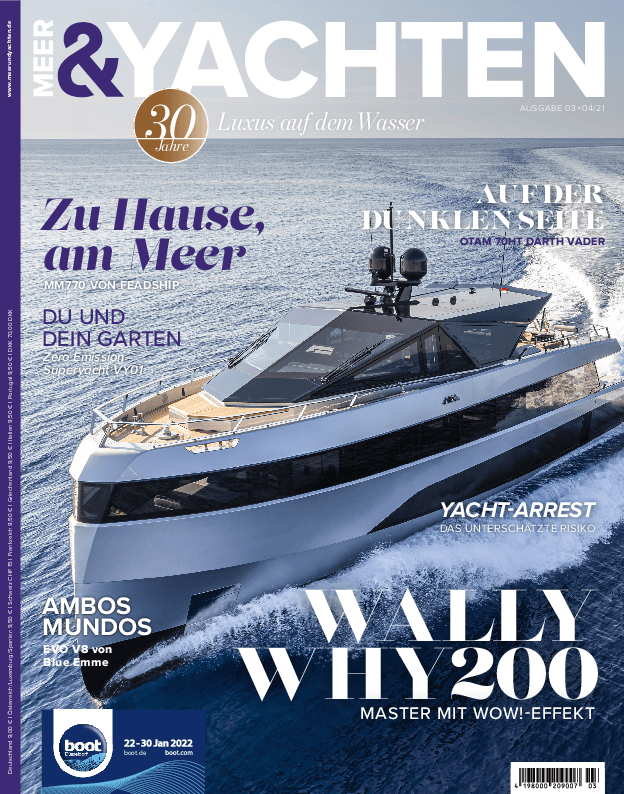
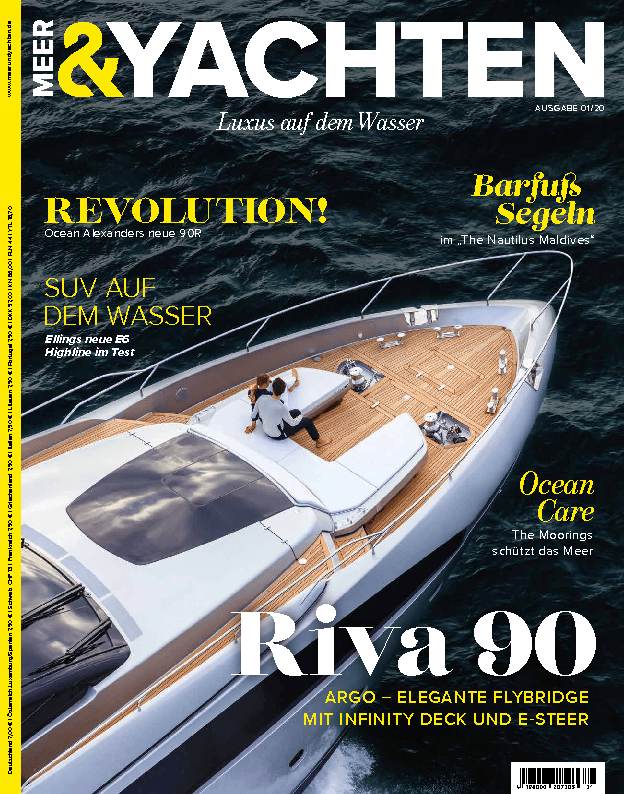
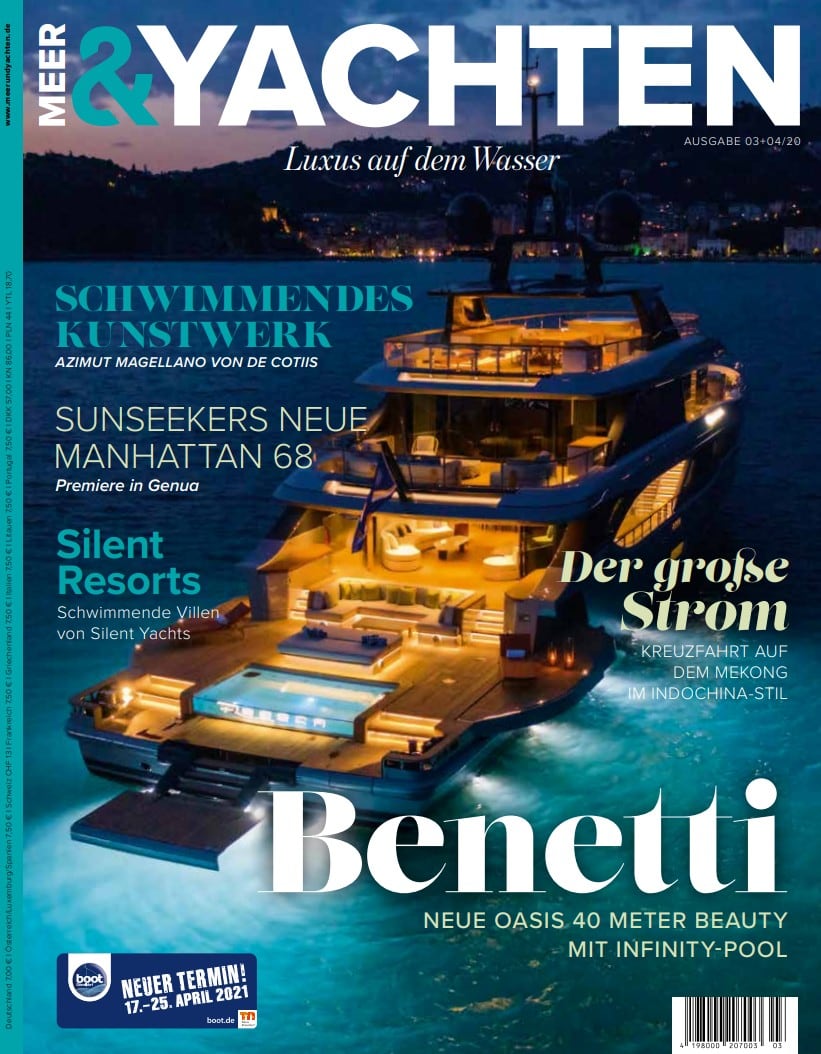
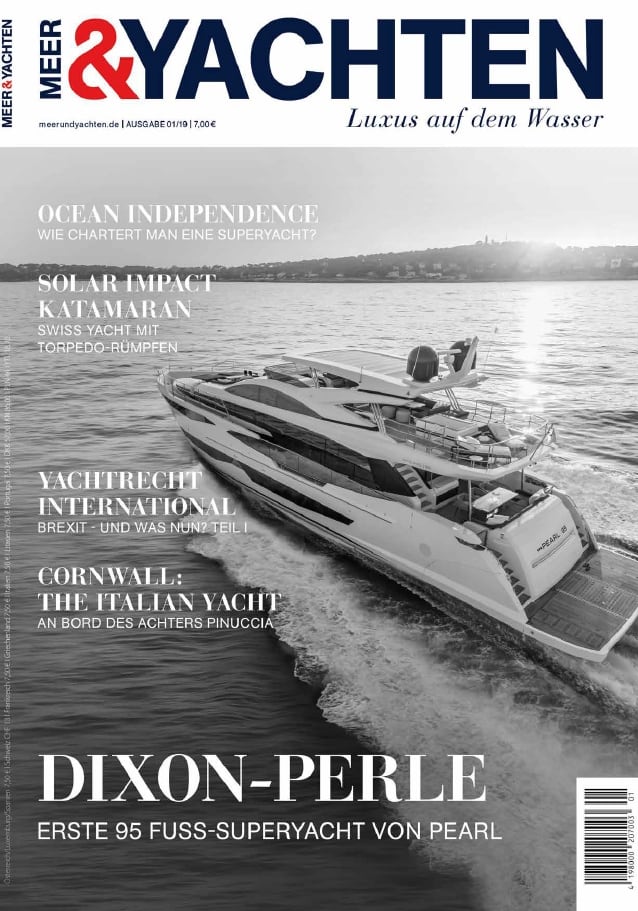
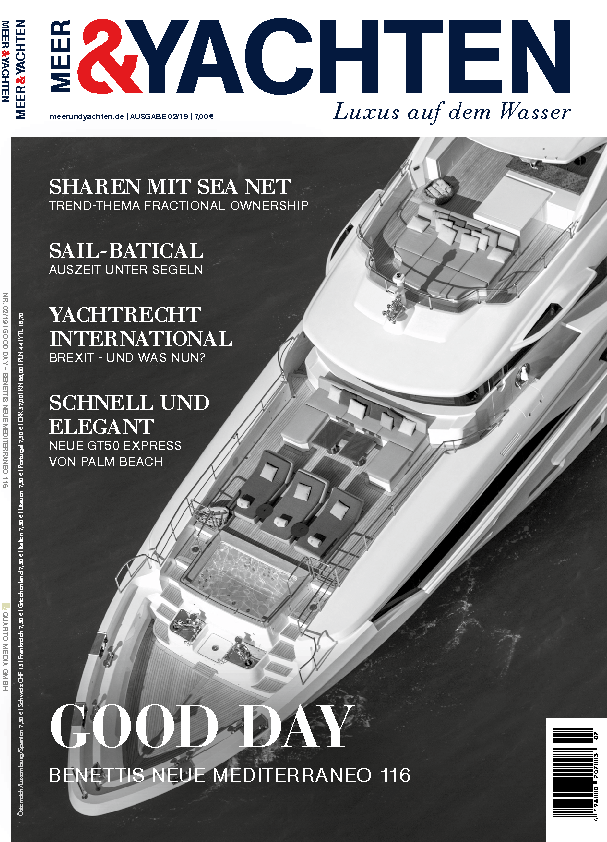
From issue 2/2018, I will be writing for Meer & YACHTEN, the magazine for luxury on the water originally published by Boat International for 20 years. Meer & Yachten features current trends in boat building, portraits, travelogues, lifestyle and more.

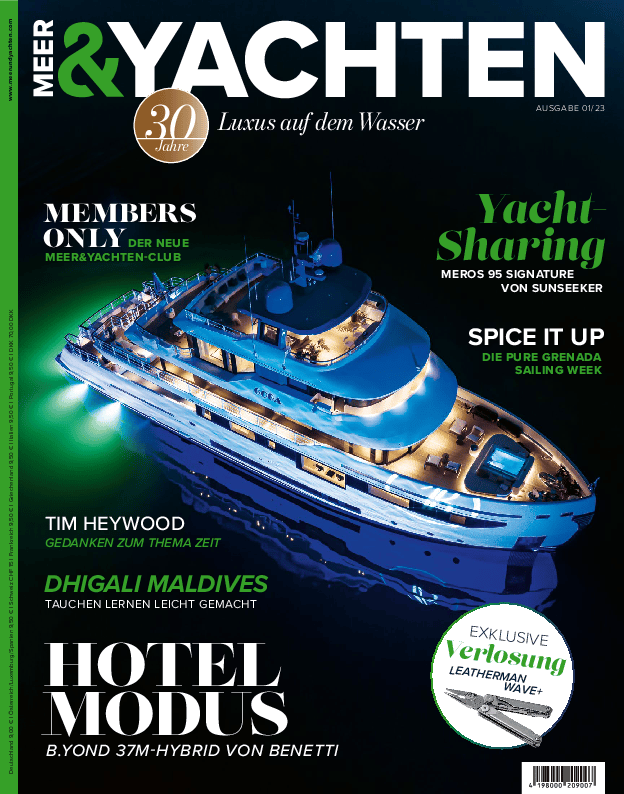
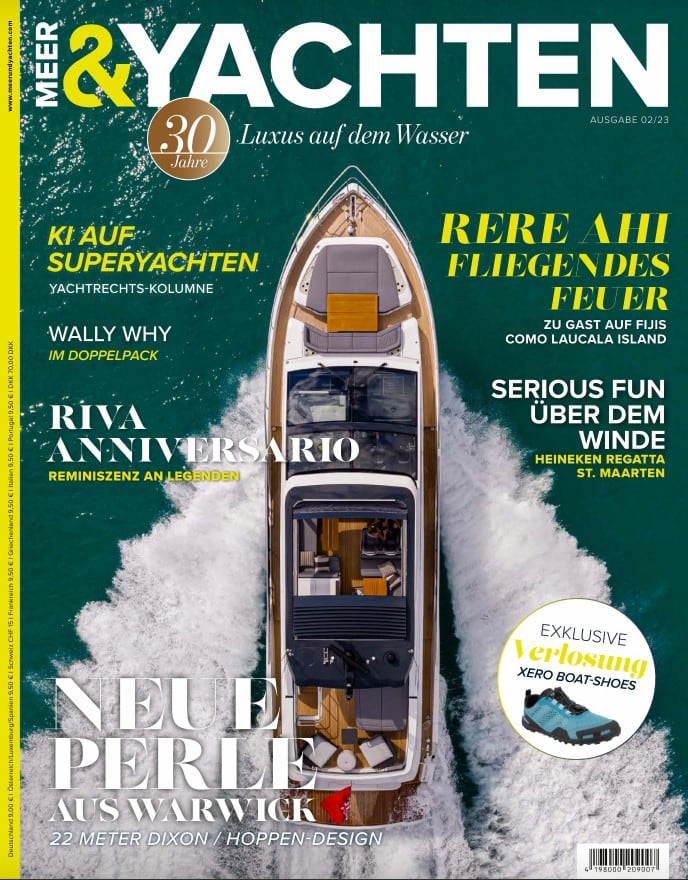
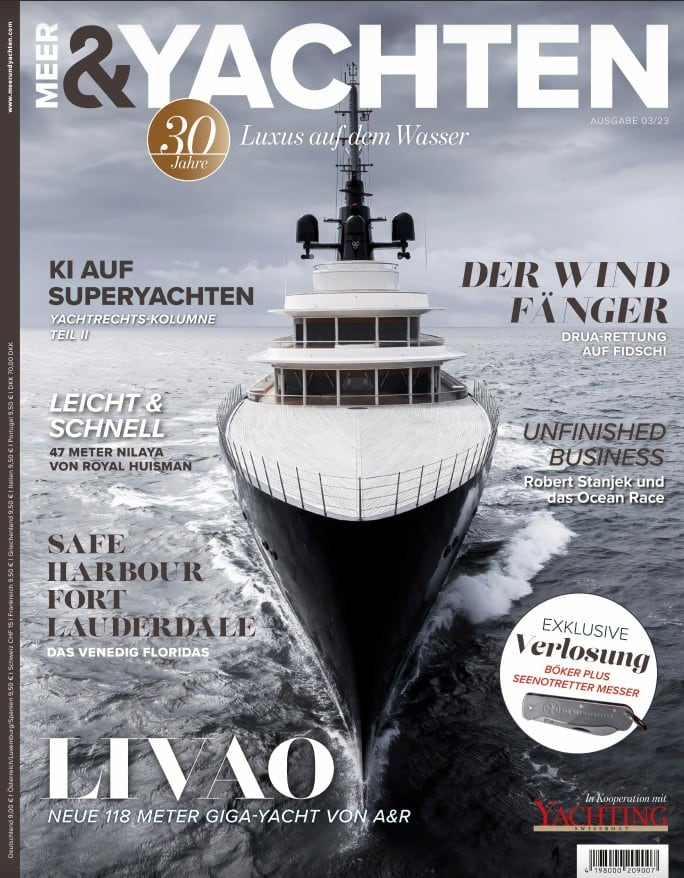




Fachbeitrag private-banking-magazin
Kommentar zum Malta-Yacht-Lease vom 04.05.2018:
“Von Steuerverkürzung oder Haftrisiken kann keine Rede sein”
Fachbeiträge Boote EXCLUSIV

Ausgaben 2018
Ausgaben 2017
Ausgaben 2016
Ausgaben 2015
Ausgaben 2014
Ausgaben 2013
Ausgaben 2012
Fachbeiträge INVICTUS (USA)
Fachbeiträge YACHTS CROATIA
Bücher und weitere Publikationen
» Bücher und weitere Publikationen finden Sie unter www.cps-schliessmann.de